This website uses cookies and similar technologies, including pixels, for the operation of the site, to enhance your browsing experience, perform statistical analysis, and tailor content to your preferences. Some cookies and pixels are provided by third-party service providers (such as Google Analytics, Meta Pixel, etc.) and may process non-identifiable information, including IP address, browser data, and browsing habits, in accordance with their own privacy policies.
The use of cookies is subject to your explicit consent. You may decline or withdraw your consent at any time. (Cookie preferences can be managed at any time through your browser settings.) Please note that refusing or blocking cookies may result in some website features not functioning properly, and may affect the quality and availability of services on the site.
For more information, please refer to our Privacy Policy.
Manage Cookie Preferences, expanded
Always active
The technical storage or access is strictly necessary for the legitimate purpose of enabling the use of a specific service explicitly requested by the subscriber or user, or for the sole purpose of carrying out the transmission of a communication over an electronic communications network.
The technical storage or access used solely for statistical purposes.
The technical storage or access is required to create user profiles to send advertising, or to track the user across one or multiple websites for similar marketing purposes.
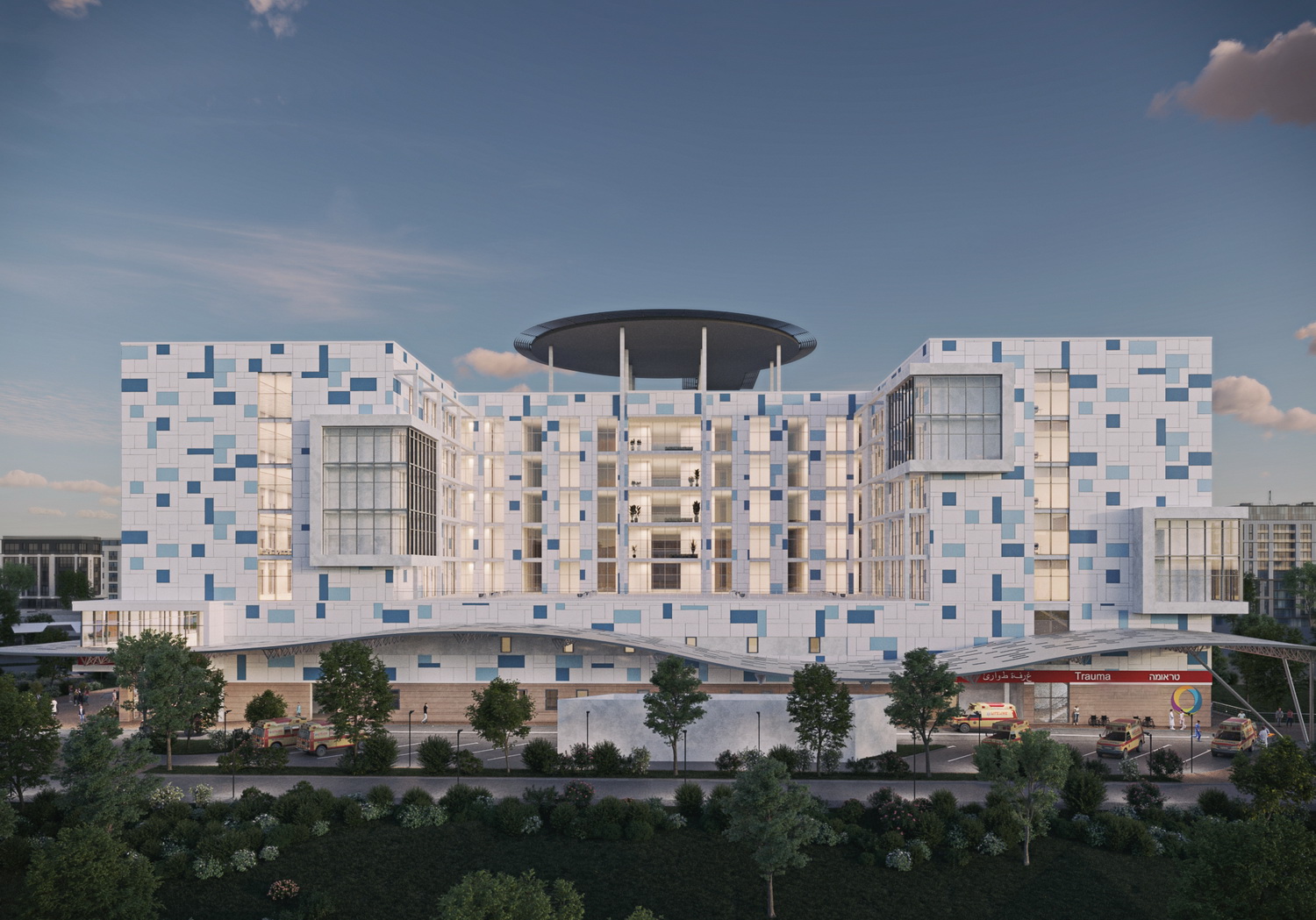
Construction of a Fortified Building for the ER, Emergency Hospitalization and Operating Rooms
The Hillel Yaffe Medical Center (HYMC) is the largest and main hospital between Tel Aviv and Haifa. The hospital serves a population of approximately 600,000 residents, with numbers continuing to grow due to its location in one of Israel's largest expansion areas (including the new city of Harish).
HYMC’s Emergency Medicine Department (ER) was built in the 1980s according to the standards and regulations of that time. It is not suited to the region’s growing population, the hospital's current and future needs, and it is not fortified.
In 2024, approx. 94,000 patients were treated in HYMC’s ER.
Hillel Yaffe Medical Center serves as a regional trauma center, treating approx. 100 trauma patients of varying severity daily in its Emergency Medicine Department (ER). Additionally, due to its proximity to major transportation routes, the hospital receives a high number of road traffic casualties.
The Emergency Medicine Department (ER) spans only approx. 1,350 sq. m (150 sq. m of which are designated for the waiting area). It includes just 26 treatment beds and 2 trauma beds. There is no isolation room, no dedicated imaging unit, and it is not fortified - despite the hospital's strategic location, just 5 km from Israel’s largest power plant, "Orot Rabin."
The hospital’s location and its role as a regional trauma center require preparedness for any emergency scenario and the ability to treat a large number of casualties simultaneously. The threat of missile attacks from Gaza, Lebanon, and Iran, the "Swords of Iron" war, terror attacks, and mass casualty incidents that have occurred near the hospital, have further emphasized the urgent need to establish a new, large, and fortified Emergency Medicine Department (ER), a project that has been designated by the Ministry of Health as one of national importance.
The new fortified ER will ensure high quality and accessible medical care both during routine times and in emergencies (such as missile attacks, chemical, biological, and atomic warfare, mass casualty events, earthquakes, and other natural disasters). In order to provide these critical treatments and save lives, it is essential to fortify key hospital facilities, including the ER, inpatient departments, and operating rooms. Currently, none of these facilities at Hillel Yaffe Medical Center is fortified .
The construction of the project, which began in January 2023, includes preparatory work, infrastructure development, and the establishment of transportation routes in preparation for the next phases. This stage is expected to be completed by January 2026.
The next phase is set to begin in the first quarter of 2026 and conclude during 2028. It includes:
Construction of a fully fortified ER - 5,800 sq. m, (5 times larger than the current ER), including:
Acute care section – 53 treatment stations
Walk-in clinic – 12 treatment rooms and 28 treatment lounge chairs (this area will also serve as a biological ER when needed)
6 trauma stations
Dedicated imaging complex
2 isolation rooms
Construction of a protected emergency hospitalization shell (Floor -1) – 6,900 sq.m. designated for approx. 300 beds.
Construction of a protected operating rooms shell (1st Floor) – 5,821 sq. m, designated for 14 modern and spacious operating rooms in the future.
Construction of a protected emergency hospitalization shell (Floor -1) – 6,900 sq.m. designated for approx. 300 beds.
Construction of a protected operating rooms shell (1st Floor) – 5,821 sq. m, designated for 14 modern and spacious operating rooms in the future.
Costs
The total cost of the project is estimated at approx. 260 million NIS (approx. $ 70 Million).
As of now, the Ministry of Health has allocated approx. 90 million NIS (approx. $19 Million).
The "Swords of Iron" war and the events that took place near the hospital have further emphasized the crucial importance of establishing a large and fortified Emergency Medicine Department (ER). This is a project of immense significance, both for the hospital and on a national scale.








.jpg?BannerID=39 "youtube channel")