The first days of life for a premature infant are filled with challenges, both for the baby and for the parents. The incubator, medical equipment, and the unavoidable physical separation can create a profound sense of distance. A new initiative developed through a collaboration between the Occupational Therapy Service, the Newborn and Neonatal Care Department, and the hospital's Textile Services at Hillel Yaffe Medical Center helps bridge that gap by harnessing one of a newborn's earliest and most highly developed senses: the sense of smell.
Known as Close to the Heart, the project uses soft flannel fabric hearts that are exchanged daily between mother and baby. The hearts absorb each other's natural scent and transfer it between them, helping create a sense of security, closeness, and calm even during the hours when they cannot be physically together. The initiative was inspired by a similar project implemented in the Neonatal Intensive Care Unit (NICU) at Meir Medical Center, led by Dr. Adi Freund Azaria, an occupational therapist.
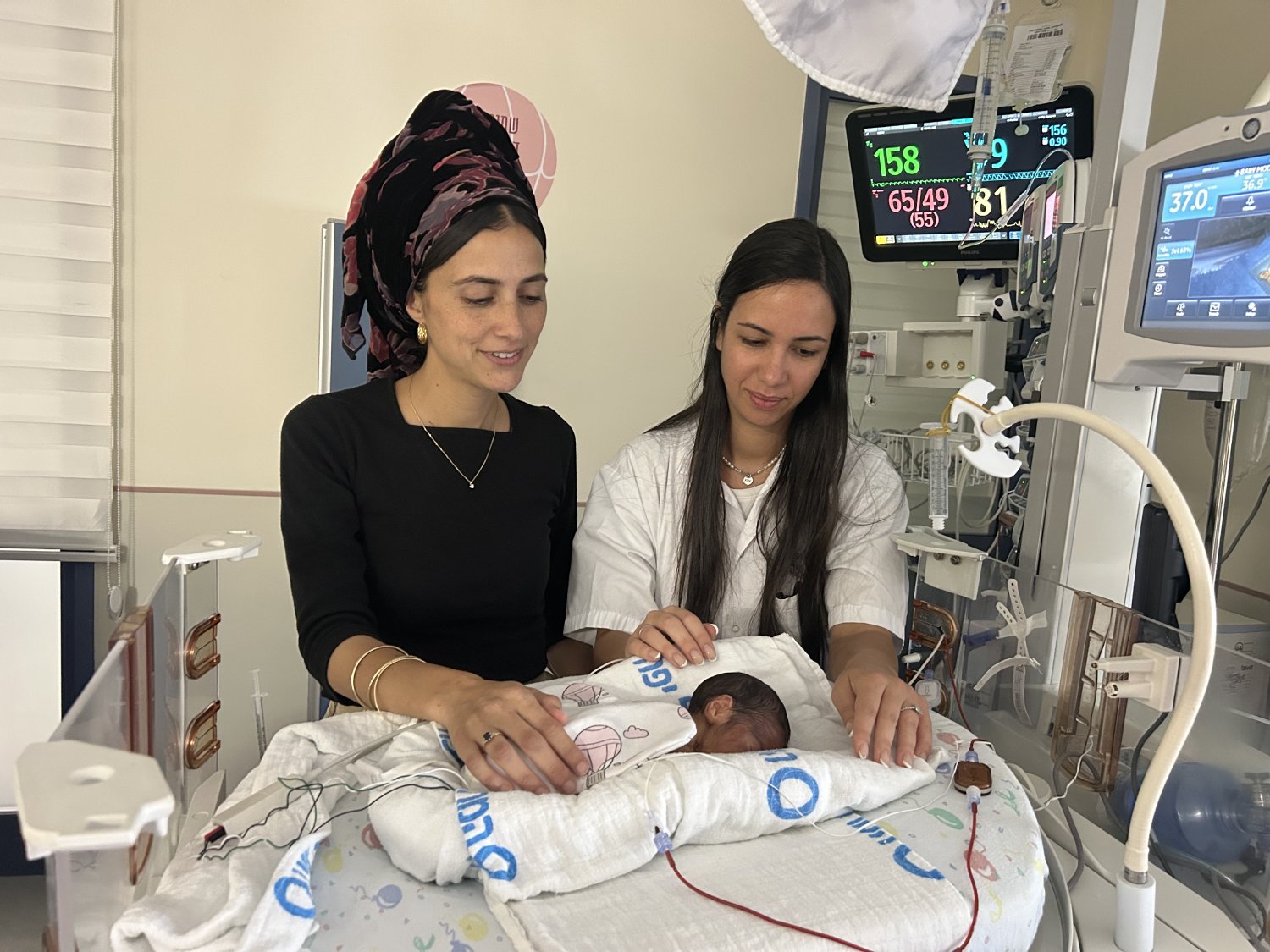
The Close to the Heart project at Hillel Yaffe Medical Center's Newborn and Neonatal Care Department
Beyond its significant emotional value, the project also offers important medical and developmental benefits. A premature infant's sense of smell begins developing in the womb and serves as the primary way the baby recognizes its mother during the first weeks of life. Studies have shown that a mother's scent helps stabilize premature infants' physiological parameters, including heart rate, respiration, and oxygen saturation, reduces stress levels, and may even help alleviate pain.
"When mothers go home, their babies are left without the familiar sensory cues they have come to recognize. These hearts allow the mother's scent to remain with the baby, providing a sense of security and calm. It is a simple yet powerful tool that reminds the baby they are not alone, while allowing the mother to remain present and comforting even from a distance," explain Shira Yitzhaki Cohen and Noa Schiff, occupational therapists at Hillel Yaffe Medical Center who lead the project.
Dr. Amit Hochberg, Director of the Newborn and Neonatal Care Department at Hillel Yaffe Medical Center, explains that caring for premature infants today extends well beyond medical treatment and advanced technology to include a precise, supportive, and holistic approach.
"Consistent exposure to the mother's scent acts as a natural pain reliever for premature infants and helps stabilize their physiological parameters. Being close to the mother, whether physically or through a comforting intermediary such as this, allows the newborn to shift from a state of survival to a state of calm, even when the parents cannot be physically present. This exchange of scents is equally important for the mother. Her baby's scent stimulates the release of oxytocin, often referred to as the 'love hormone,' helping reduce anxiety while also supporting breast milk production, which is the best nutrition and medicine for premature infants. It is a small project, but one of tremendous importance that has the potential to make a meaningful difference in the health of these babies."






.jpg?BannerID=39 "youtube channel")