Many parents spend time and money on workbooks, but what they may not realize is that being ready for first grade involves much more than knowing letters and numbers. Children also need a wide range of language and communication skills that no workbook can teach, such as understanding instructions, taking part in conversations, describing experiences, asking questions, and forming social connections.
Language and communication skills are the foundation for learning, social integration, and success at school. Parents can play an important role in developing these skills through simple, enjoyable activities that are easily incorporated into everyday life.

Shani Rosenwasser
Books, Books, Books – Reading together is one of the most effective ways to enrich your child’s language skills and prepare them for learning. Beyond providing quality time with a parent, books expose children to a richer vocabulary, a variety of language structures, letters, and the written word. As you read, pause occasionally to ask questions about the characters: Who? What? Where? When? Why? This will help you gauge your child’s comprehension skills, which will later form the foundation for reading comprehension. Talking about the story also encourages thinking, the ability to draw conclusions, and verbal expression.
Word Games – Long before children learn to recognize letters, read, and write, they learn by listening to language. “Phonological awareness,” the ability to recognize and work with the sounds that make up words, is one of the building blocks for learning to read and write. You can develop this skill through simple, fun word games. Try finding words that begin with the same sound, such as ball, baby, and book, or words that rhyme, such as cat and hat or light and night. You can also ask your child to identify the first or last sound in a word: “What sound do you hear at the beginning of ‘ball’?” “B.” Another option is to play games that involve breaking words into syllables and putting them back together: “What word do we get when we put ‘ta’ and ‘ble’ together?”
Following Directions – In the classroom, children need to listen to the teacher’s instructions, remember them, and then carry them out in the correct order. Games such as “Simon Says,” as well as simple tasks around the house that involve several steps, can help children practice attention, auditory memory, and the ability to follow directions. For example, Simon says: “Raise your hand,” “Stand on one foot and shout your name,” or try a multistep instruction such as, “Go to the bathroom, get a toothbrush, and put it on the table.”
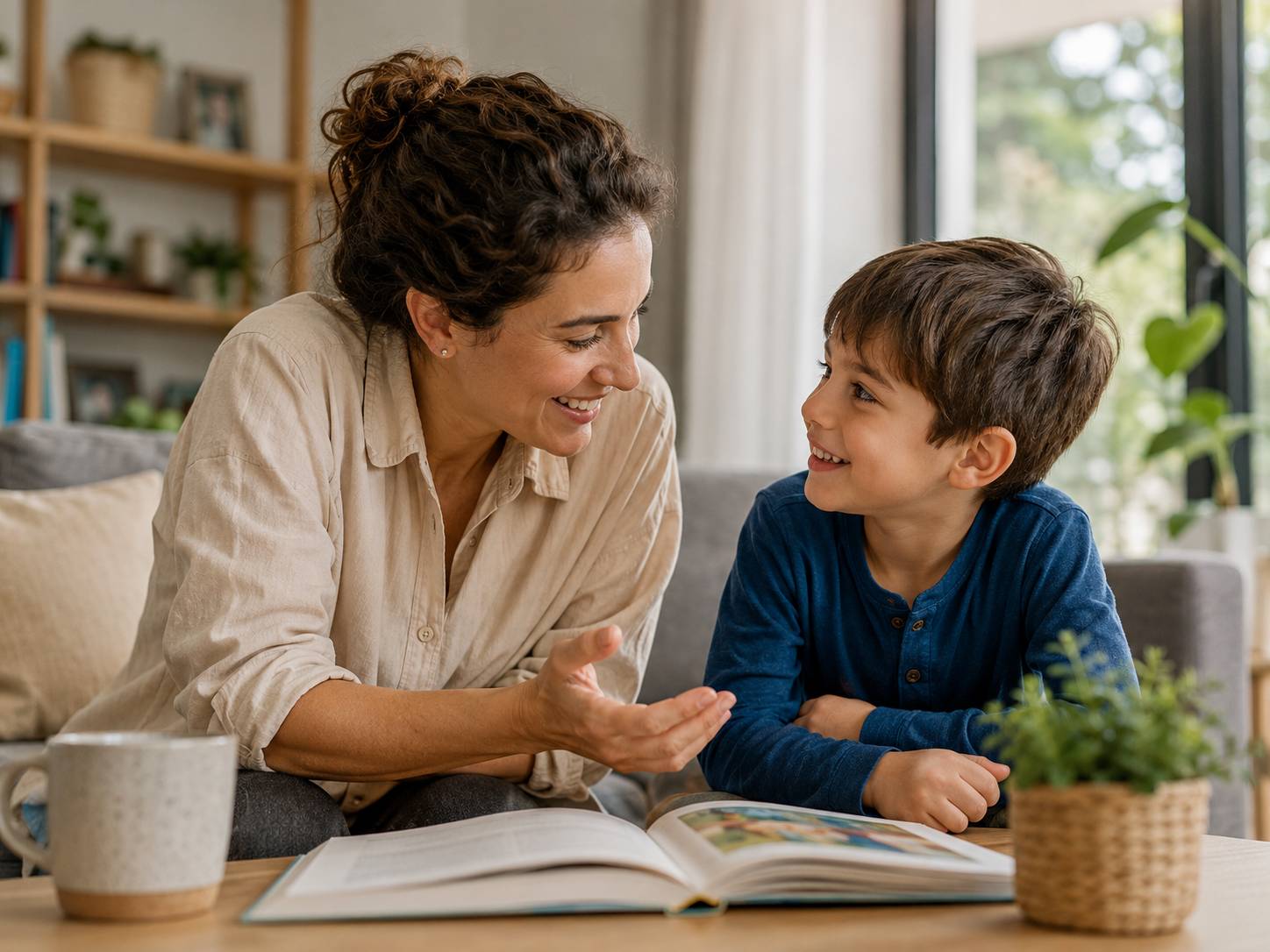
Talking, playing, and reading together can help prepare your child for first grade
Less Screen Time, More Social Interaction – Cut back on screen time and encourage your child to interact and socialize with peers and adults. Practice how to join a game, ask for help, wait their turn, disagree respectfully, and resolve disagreements through conversation. These skills can help children fit in socially and feel more confident in the classroom.
Talk, Talk, Talk – Make the most of everyday routines to have meaningful conversations, whether you’re on the way to the park, sitting down for a meal, or getting ready for bed. Encourage your child to talk about their experiences in the order they happened, describe people and places, and explain their thoughts and feelings. Open-ended questions invite richer conversations and strengthen verbal expression.
As your child gets ready to start first grade, if you notice that they have difficulty understanding instructions, telling a story clearly, learning new words, pronouncing sounds clearly enough to be understood, or communicating with their peers, it’s a good idea to consult a speech-language pathologist.
Have a wonderful summer vacation and a successful school year.








.jpg?BannerID=39 "youtube channel")